
Six things you need to know before visiting Peru

Cash is king

lt’s a ‘cash only’ world in Peru which can take so me getting used to if you’re coming from the UK where people use plastic to pay for absolutely everything from tube fares to food shopping.

Conversely in Peru, it’s almost impossible to use credit cards in small towns and villages while, even in big citieslike Lima and Cuzco, a staggering amount of restaurants sport signs in their window saying ‘cash only’.

Don’t be snap happy

take a photoAlways ask permission before taking a picture of a Peruvian – this is especíally important lf children are involved. We have no right to take photos of people without first asking their consent.

Coca leaves can help cure altitude sickness
cocaHead spínníng? Having trouble sleepíng? Or perhaps the hotel stairs are making you breathless? If you answered yes to any of the aforementioned questions, chances are you’re suffering from altitude sickness which isn’t surprisinggiven that most visitors spend a substantial amount of time in Cusco, the cosmopolitan Inca capital that has an elevation of about 11,152 feet (Altitude sickness generally starts affecting people at 8,000 feet).

Symptoms typically dissipate within a day or two but you can help minimise them by avoiding alcohol and caffeine and drinking plenty of water and tea de coca (coca leaf tea). After a couple of sips of the latter, you’ll notice that the throbbing in your head has begun to subside and you can breathe again.
Just don’t even think about bringing a stash of coc a-the plant that is used in the manufacture of cocaine- leaves back to the UK, where they are banned.

Lima is more than a layover

Most travellers tend to check out Cuzco and Arequipa and, if not overlook Lima, then at least minimise the time spent in this bustling metropolis. Big mistake.

Peru’s capital is the second driest in the world, rising aboye a long coastline of crumbling cliffs. Lima also boasts one of the mast fabulous sunsets in the world (the city faces due west across the Pacific, so the setting sun can flood into the beaches), world-class cuisine and museums that are the envy of Latin America (here’s looking at the spectacular Museo Larco, with its galleries 01 gold and silver Chimú jewellery lighting up as the visitor approaches).

Factor in buzzing barrios like Barranco, a charming area of artists and restaurants leading down to the sea, and hip hotels – take a bow Belmond Miraflores Park – and you have a city worth stopping in rather than just using as a transit hub.

There are many ways to visit Machu Picchu

You don’t have to hike the Inca Traíl, a genuinely challenging physical experience, in arder to visit Machu Picchu for there are other ways to see the famous ruins.

If you have an aversion to strenuous exercise or are tight on time, take train up to Aguas Calientes (also known as Machu Picchu Pueblo), and visit for the day from there.

However íf you are intent on hiking to Machu Picchu via the scenic Inca Trail, as its ancient ancestors once did, forget about it in February (when the traíl is closed) and think carefully about it between June and August (the busiest months).

Chavin de Huantar-like friezes found at Lima’s Huaca Garagay

Lima Municipality archaeologists found 3,500-year-old high relief polychrome friezes —similar to those of Chavin de Huantar— at Huaca Garagay site in Lima’s San Martin de Porres district.

Lead archaeologist Hector Walde explained the friezes were carved on a pilaster (column) placed at the huaca’s ceremonial courtyard.

«These friezes display feline features highly similar and influenced by Chavin de Huantar, although their production appears to be more local and even older,» he noted.

Access stairways connecting the main square and great atrium of the complex have been discovered as well.

Abandoned for more than 30 years, the huaca is being upgraded by a Lima Municipality team of experts.

The idea is to upgrade the emblematic building and allow San Martin de Porres neighbors to get acquainted with the history of the city.

Garagay is a best architecture and art example of Lima’s formative period, with a resemblance to Cupisnique and Chavin cultures.

Over 3 million tourists visited Cusco in 2016

Archaeological and landscape sites in Cusco lured 3,053,279 domestic and foreign travelers in 2016, Cusco’s Regional Directorate of Foreign Trade and Tourism (Dircetur) informed.

Of the total, 1,084,363 came from Lima and other regions, while 1,968,916 visitors were from overseas, mainly from North America, Europe, Latin America and Asia.

Dircetur’s head Napoleon Llanos told Andina news agency this meant a 7.4% rise compared to other years, and that the region is expected to welcome 3,238,412 tourists in 2017.

Machu Picchu remains the most visited site in Cusco, and the second most promoted tour was the journey through Cusco historical center, archaeological parks Sacsayhuaman, Tambomachay, Pucapucara and the Sacred Valley of the Incas, including visits to Pisaq, Ollantaytambo and Chinchero.

Nevertheless, according to Llanos, a handful of visitors opted for natural attractions this year, with stops in the Rainbow Mountain —also known as Vinicunca— and other tourist sites like the Condor Canyon in Chonta, where Andean condors can be seen at close range as they fly past the canyon walls.

On the other hand, the city’s hotel and restaurant industry is capable to provide services to more than this year’s expected number of tourists.

Furthermore, Chinchero Airport’s construction —scheduled to begin on January 31— will improve travel services and increase foreign arrivals in this region and southern Peru.

Receptive tourism expanded between 2011 and 2016

Receptive tourism experienced growth of over 40% between 2011 and 2016, mainly boosted by Peru’s Foreign Trade and Tourism Ministry’s actions.

Measures are aimed at promoting the arrival of greater flows of tourists in the Inca country.
According to Minister Magali Silva, visits increased by 7.1% in first quarter of 2016.
«Only in March growth stood at 9.6% from the same month the previous year […],» she added.
1,890,000 out of 3,500,000 tourists —who arrived in 2015— were citizens of one APEC’s member countries.
The APEC bloc is composed of: Australia; Brunei Darussalam; Canada; Chile; People’s Republic of China; Hong Kong, China; Indonesia; Japan; Malaysia; Mexico; New Zealand; Papua New Guinea; Peru; the Philippines; Russia; Singapore; Korea; Chinese Taipei; Thailand; United States and Vietnam.
(Andina)
Receptive tourism to experience annual 15% growth starting 2018

Peru’s receptive tourism industry would experience an annual sustained growth of 15% starting 2018 if immediate measures are adopted, Lima Convention and Visitors Bureau Chairman Carlos Canales affirmed.

Such measures will have to be implemented during first 100 days of the Kucyznski administration taking office on July 28th.

«If immediate measures are implemented, receptive tourism would experience a 15% growth starting 2018. Likewise, inbound tourism would expand by 10% this year […],» he told Andina news agency.

A tourism growth of 15% would account for close to 4.5% of Peru’s Gross Domestic Product (GDP). In this sense, he stressed the sector’s relevance in job creation and contribution to domestic economy.

Acceleration in Lima’s Jorge Chavez International Airport investments, and construction of new Chinchero’s international terminal were considered «priorities» by Canales.

Besides, reducing «red tape» for investments to flow was deemed as urgent.

Tourism security bolstered all over Peru

The Government of Peru is working on a decentralized basis to guarantee security of tourism, which will lead to an increased number of visitors to the country, informed Deputy Minister of Tourism Maria del Carmen de Reparaz Zamora.

She said since 2010 Tourist Protection Networks have been launched in almost all regions except two that are expected to join the work carried out at the national level soon.

Such networks are regional government initiatives supported by the Lima technical team, which provides counseling and support for them to enhance protocols and respond to any eventuality efficiently.

As for promotion, another issue that has been strengthened intensively since 2012 is the development of the so called Travel Culture, in which Peruvians see their country as an opportunity to travel, to experience recreation activities, and to feel Peruvian by raising awareness of what knowing wonderful places really means.

“We belong to one of the six cradles of civilization, because Peru is home to cultures that have developed all over the national territory,” she highlighted.

Lambayeque plans to tender tourism investment projects in archaeological sites

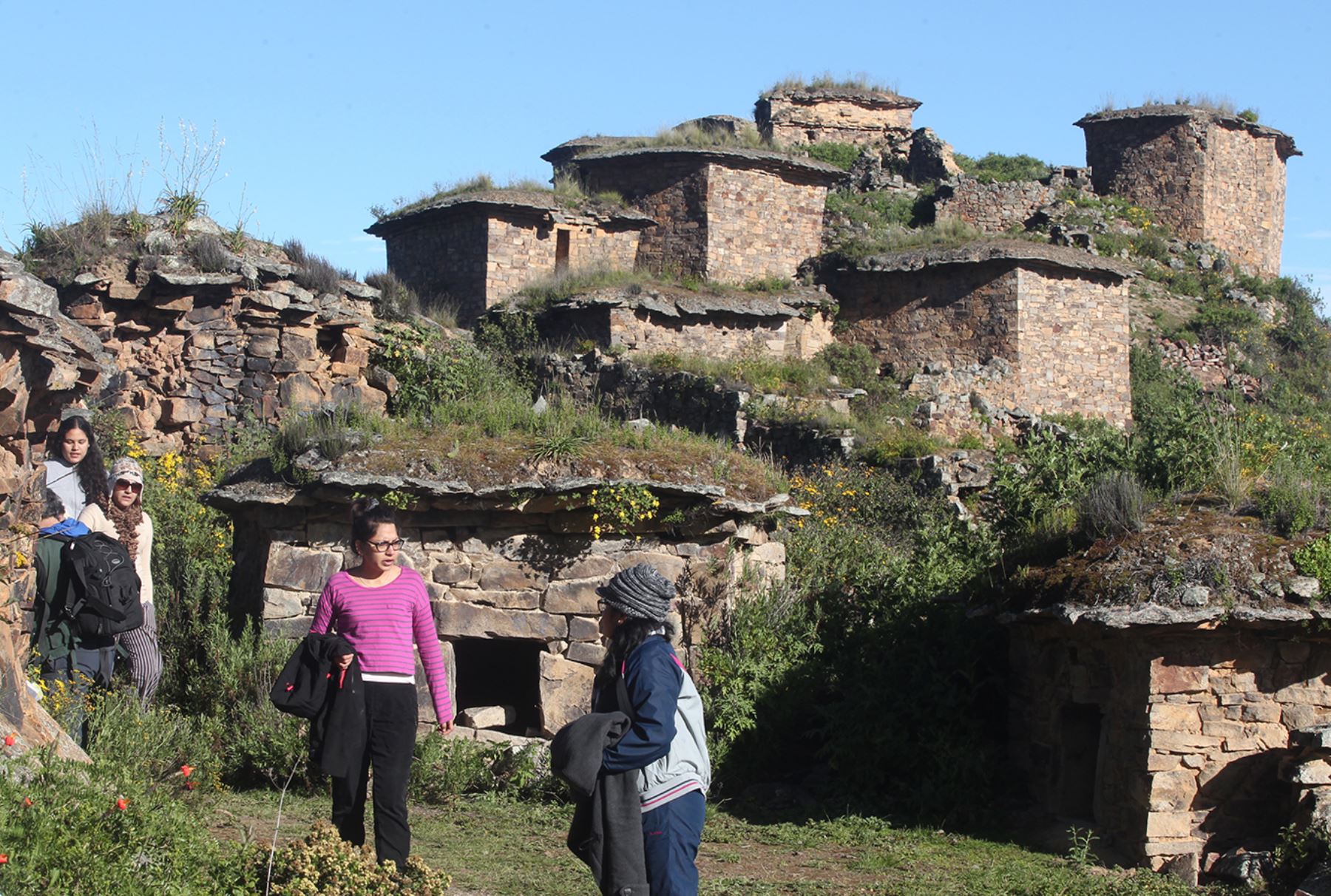
Lambayeque’s Regional Management of Foreign Trade and Tourism (Gercetur) is set to invest about S/.5 million (around US$1.5 million) in tourism projects at El Cinto archaeological site (Patapo) and the Pomac Forest Historical Sanctuary Ferreñafe), it was informed.

«The objective is to draw a greater number of visitors to this area of the country,» Gercetur’s President Lindon Vela Melendez affirmed.

The said state agency will launch a call for tender worth more than S/.4 million (over US$1.2 million) for the project “Installation of Tourist Services in El Cinto,” involving an archaeological complex located in Patapo, Lambayeque region.

He said terms of reference are ready and the call for tender should be made.

“This is a very important space due to its contribution to the pre-Hispanic development in Chiclayo.” Vela was quoted as saying by Andina news agency.

He confirmed they are finishing the technical file of the US$221,000 works to be undertaken at the Pomac Forest Historical Sanctuary under the direct administration.

Peru’s Single Window for Tourism tool to US$2 billion hotel projects

Implementing the ) will provide private sector with tools required to complete a series of hotel projects, affirmed Javier Hundskopf, the head of Peruvian Association of Hotels, Restaurants and Related Establishments (Ahora).

Several hotel projects –worth US$2 billion– are on desk for the next two years, which might alleviate the current deficit of four- and five-star hotels in the Peruvian capital city.
“It has been proven that the amount of four- and five-star hotels [in Lima] is not enough to meet accommodation demands, taking into consideration the next first-rate international events due to take place in Peru through 2021,” he stated.
«As for gastronomy, one restaurant opens each day somewhere in the nation, specially in inner regions,» he said at the opening of Ahora’s Decentralized Council in Ica city.
“They [businessmen] have learned there is nothing better [for diners] than finding flagship products such as chancho al palo orsalchicha huachana. This translates into a greater number of visitors,” he continued.
For this reason, he is confident the government will run VUT starting on August this year.
The event featured regional authorities, local businessmen and university students majoring in tourism.

Starting August and for the first time in history, Peru will become part of the Board of Directors of the United Nations World Tourism Organization (UNWTO) in recognition of its several tourist attractions, Peru’s Minister of Foreign Trade and Tourism Magali Silva said.

«This means the Foreign Trade and Tourism Ministry will have a seat at this Board of Directors. This is the world’s recognition for a country like ours, which can continue expanding due to its several tourism resources,» she explained.

The UNWTO is, as its website indicated, «a United Nations Agency responsible for the promotion of responsible, sustainable and universally accessible tourism.»

UNWTO: Peru is gaining global popularity due to great tourism destination’s image

The Regional Director for the Americas at the UN World Tourism Organization (UNWTO), Carlos Vogeler, today affirmed Peru is having remarkable place in the world’s tourism industry due to its diversity and quality of products this sector has to offer.

Peru is not well known only for the Historical Sanctuary of Machu Picchu, but also for other tourist attractions such as the Moche Route –which links Lambayeque and La Libertad– and tourist circuits in Lima, Arequipa, and other areas across the country.
“We are talking about a very attractive country that offers diversity, cultural, archaeological and historical value, in addition to its gastronomic culture as an intangible asset with significant value. Peru is gaining popularity in the world tourism map due to its great tourism destination’s image,” he told Andina news agency.
This is due to improved public policies, up-to-date- infrastructure of hotels and restaurants, as well as fulfillment of promotion campaigns.
“I am convinced Peru has enormous tourism potential; we have been following its evolution very closely and we have noticed a good implementation of public policies,” he commented after attending the 15th Global Summit held  by the World Travel and Tourism Council in Madrid.
Vogeler also praised the advertising campaign ¿Y tu que planes?, a domestic tourism promotion initiative launched by the Ministry of Foreign Trade and Tourism (Mincetur) seeking to nurture a true travel culture among Peruvians, which obtained the UNWTO Ulysses Award in January last year.
One of the challenges of Peru, he added, is to improve tourism-earned incomes and make the activity more beneficial for populated areas where tourism projects are implemented.